
A sow that leaves feed in the trough every morning is the first sign of a problem that rarely stays in one stall. Within a few weeks that wasted feed shows up as thinner backs, restless animals, and a feed bill that no longer matches the output. The feeder itself gets blamed last, because it is the one piece of equipment people assume will simply work once it is bolted in place. The truth is that the feeder sets the terms for almost everything else in the barn, and when it is chosen badly or left uncalibrated, the consequences ripple outward in a predictable order.
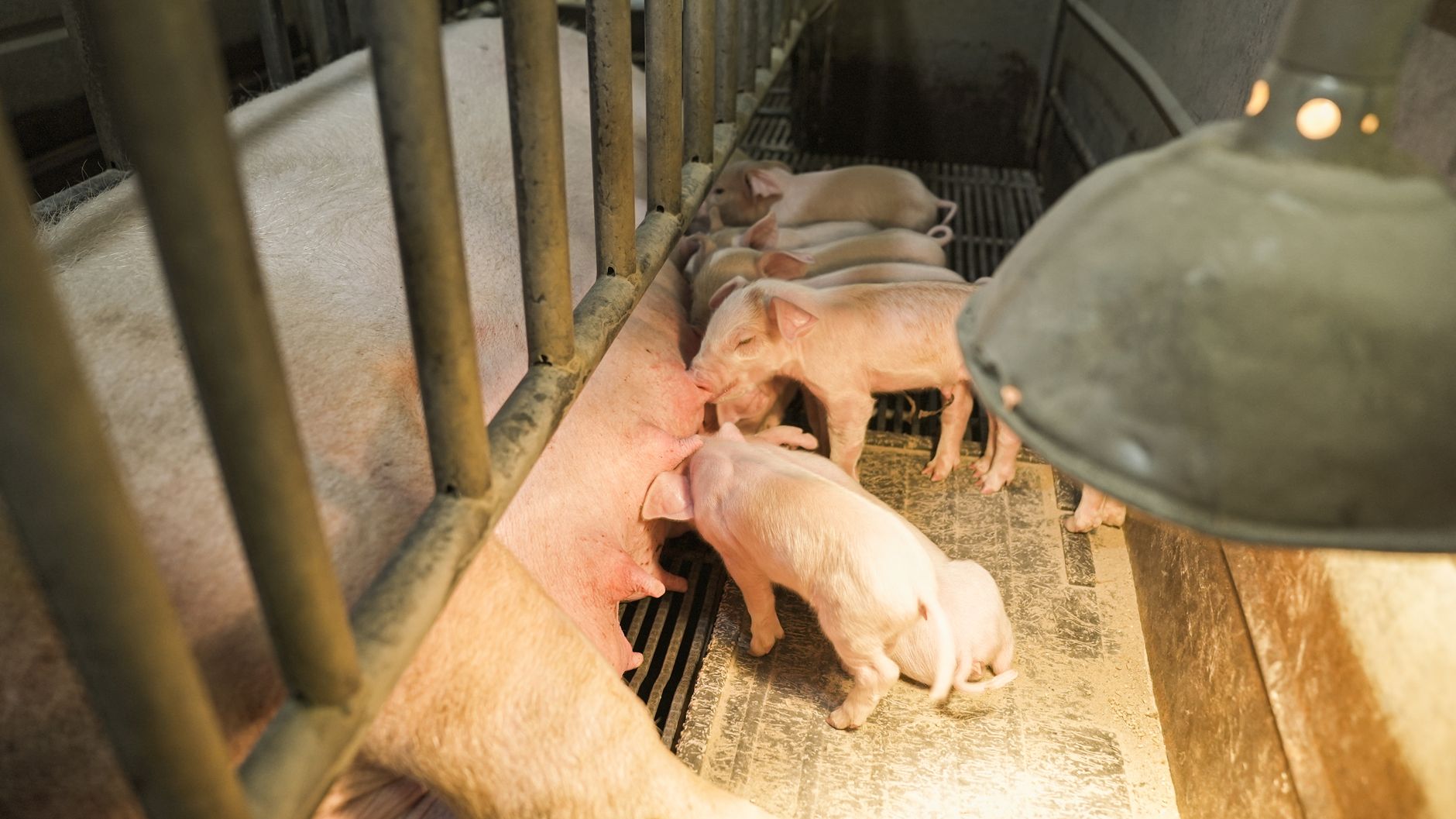
Suppose the feed drops too fast for the sow to keep up
A feed mechanism that releases its portion in one quick rush changes how the animal eats. A sow can only work through so much at a pace that keeps her calm. When the drop outruns her, she bolts what she can, spills the rest, and walks away before the ration is finished. Fast delivery also encourages gulping, which brings its own digestive trouble. What looks like a generous feeder is actually handing part of every meal to the floor.
The quiet damage of a feeder that wastes a little every day
Daily waste is easy to ignore because no single morning looks alarming. A handful here, a thin layer of meal pushed out of the trough there. Multiply that small loss across every sow, every feeding, every day of a long production cycle, and it becomes a line item nobody budgeted for. The waste never announces itself. It just quietly lowers the return on feed that was already paid for.
What happens to body condition when portions drift off target
Portion accuracy is the hinge the whole system turns on. A feeder that drifts even slightly off its setting delivers a little too much to some animals and a little too little to others. Over a gestation, those small errors compound into real swings in body condition. An over-conditioned sow struggles at farrowing; an under-conditioned one enters lactation without the reserves she needs. Neither is dramatic on any given day, which is exactly why the drift goes unnoticed until the scoring session reveals a herd that is all over the map.
Cascading effects on litter size and weaning weights
Condition is not an end in itself. It is the foundation for reproductive performance, and when it slips, litters pay for it. A sow carrying too little reserve produces less milk, and piglets that start behind rarely catch up before weaning. On the other side, condition problems tied to inconsistent feeding can show up in smaller litters at the next breeding. The feeder error that began as a few grams off target ends as fewer pigs weaned and lighter ones at that.
A clogged line on a Monday morning and the hours it costs you
Then there is the acute failure. A feed line that bridges or clogs over a weekend greets you with hungry, agitated animals and a line of stalls to clear by hand. In the humid stretches of the growing season across much of the Midwest and the Prairies, damp feed cakes and jams more readily, and a design that resists bridging earns its keep on exactly those mornings. The hours spent clearing a blockage are hours not spent on the rest of the barn, and the stress it puts on the animals does not reset the moment feed flows again. Reliable sow feeders for farrowing barns are built to keep delivery smooth under those conditions, which is why many producers treat clog resistance as a first-order spec rather than a bonus feature. You can browse options like the sow feeders for farrowing barns that are designed around steady, controllable flow to avoid these Monday-morning scrambles.
Why matching sow feeders for farrowing barns to your group size changes the math
Scale changes the calculation in ways that are easy to underestimate. A feeder that suits a handful of stalls behaves differently when it is managing a large group, where competition, access, and timing all come into play. Choosing a system sized to your actual group means fewer animals crowded out, more even intake, and less labor spent correcting for the ones that got shorted. Match the equipment to the group and the daily management gets simpler; mismatch it and you spend the rest of the cycle compensating by hand.
If nothing changes, where does the barn end up in a year
Run the whole chain forward for twelve months and the picture sharpens. Wasted feed accumulates into a measurable loss. Drifting portions leave a herd with uneven condition. Weaning numbers soften, and the labor absorbed by blockages and manual corrections never shows up as a single big cost but as a steady drain. A feeder is a small purchase against the value of the animals it serves, and that is precisely why neglecting it is such an expensive habit.